

In the conversation about indoor air quality (IAQ), particulate filters often take center stage. But when it comes to tackling pollutants you can’t see or smell, activated carbon filters quietly do the heavy lifting. From volatile organic compounds (VOCs) to lingering odors, carbon filtration addresses some of the most stubborn and potentially harmful airborne contaminants. In fact, VOC concentrations are often two to five times higher indoors than outdoors and can reach up to 1,000 times higher during and after the use of everyday products. So why aren’t carbon filters more widely used in traditional HVAC systems?
Let’s explore the benefits, challenges, and future of activated carbon filters, and why their role in commercial air purification is poised to grow.
How Activated Carbon Filters Work and What Standard Filters Miss
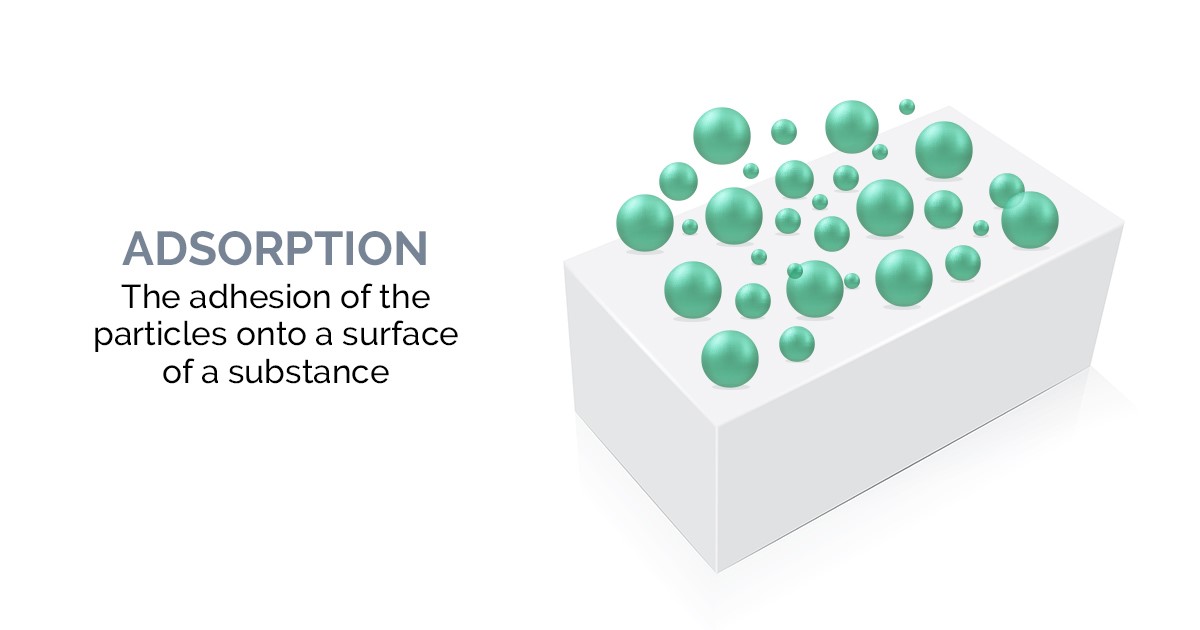
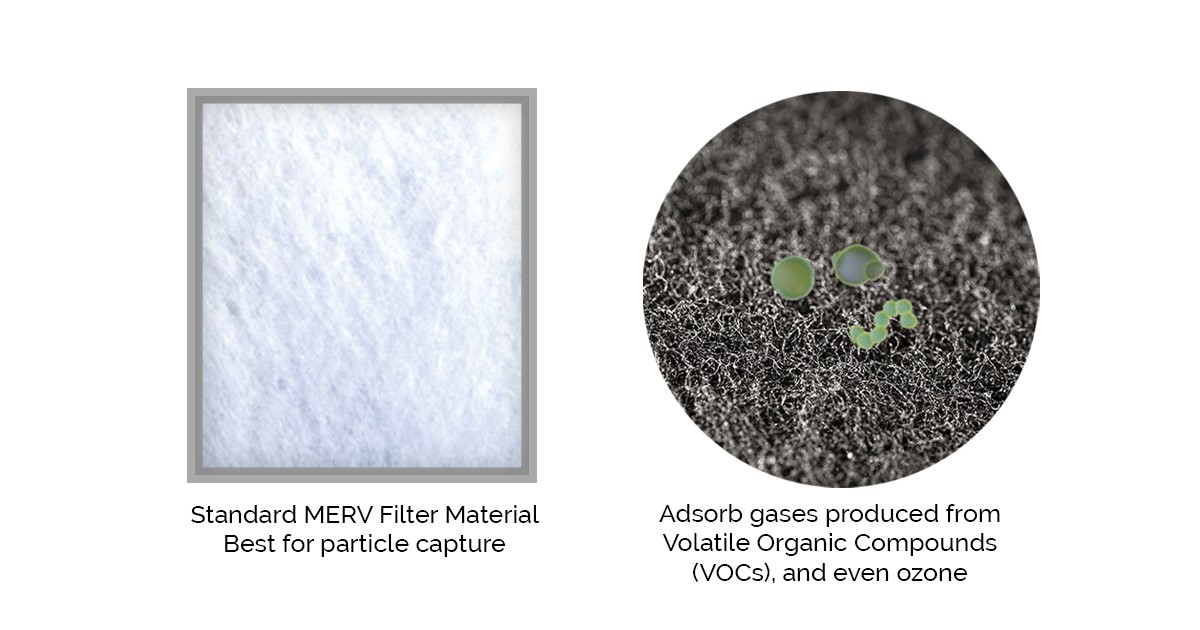
Activated carbon filters purify air through adsorption, a process in which gases, chemicals, and odors cling to the filter’s highly porous carbon surface. This makes them uniquely effective at capturing VOCs, smoke, and other gaseous pollutants that standard HVAC filters can’t touch.
Traditional HVAC filters, often rated using the MERV scale, are designed to trap solid particles like dust, pollen, and mold spores. While essential, they fall short when it comes to VOCs from cleaning supplies, off-gassing furniture, or building materials. That’s where carbon filters fill the gap.
Not All Carbon Filters Are the Same
There’s a difference between carbon filters and activated carbon filters—and it matters, especially for indoor air quality.
Carbon Filter (general term):
- Often refers to any filter that uses carbon as part of its filtering process.
- Some carbon labeled filters may just include basic charcoal or low-grade carbon.
- May be less porous and less effective at adsorbing gases or odors.
Activated Carbon Filter (specific and superior):
- Uses carbon that has been processed to increase surface area and porosity—this makes it “activated.”
- Highly effective at adsorbing VOCs (volatile organic compounds), odors, and some gases (like ozone or formaldehyde).
- Often used in high-quality air purifiers, including Fellowes filters, for targeted chemical and odor removal.
If you’re aiming to manage VOCs, odors, and chemical gases, look for activated carbon—not just “carbon.”
Why Are Carbon Filters Overlooked in HVAC Design?
Despite their effectiveness, carbon filters are often left out of large-scale HVAC systems. Why?
– Increased System Load: Carbon filters can restrict airflow more than standard filters, making blowers work harder and consume more energy.
– Maintenance Complexity: Lifespan varies based on pollutant load, so managing replacement cycles across an entire building can be difficult.
– Filter Longevity: Carbon filter effectiveness diminishes gradually, which can make performance harder to track without proper monitoring.
– Perceived as Non-Essential: Many building engineers prioritize basic particle filtration and underestimate the long-term risks of chemical pollutants.
– Misconceptions About Application: Carbon filters are often associated only with specialized environments (like labs or industrial spaces), but they’re just as critical for offices, schools, and healthcare settings where VOCs and odors are common.
– Lack of Awareness: Many decision-makers simply aren’t aware that standard HVAC filters do little to address gases and odors, leaving a critical gap in air quality protection.
These factors can make carbon filtration seem like a luxury rather than a necessity—even though indoor environments increasingly demand more comprehensive purification. As awareness of VOCs, odors, and chemical pollutants grows, so should the role of carbon filtration in everyday IAQ management.
Closing the Gaps in Air Quality with Carbon Filtration
Standard HVAC filters simply aren’t built to manage chemical pollutants. In spaces where people are exposed to emissions from furniture, adhesives, disinfectants, or daily operations, this leaves a serious blind spot.
Activated carbon filters offer a targeted solution:
– Capture harmful VOCs that contribute to headaches, nausea, and long-term respiratory issues.
– Neutralize unpleasant or distracting odors.
– Prevent redistribution of pollutants through ductwork, especially in multi-floor buildings.
Without this layer of protection, buildings risk recirculating air that’s clean of particles, but still chemically polluted.
A Smarter Strategy: Localized Purification
Rather than pushing HVAC systems to do it all, many buildings are turning to localized purification units that integrate activated carbon. This approach offers a number of advantages:
– Targeted Coverage: Purifiers can be placed in areas with high pollutant loads, like copy rooms, lobbies, restrooms, or newly renovated zones.
– System Relief: Less strain on centralized HVAC systems by removing VOCs closer to the source.
– Simpler Maintenance: Easier to manage filter changes in a few units rather than across an entire duct system.
This kind of hybrid approach, combining HVAC filtration with stand-alone purification, offers a more holistic and manageable solution.

Clearing the Air on Carbon Filter Misconceptions
Some assume activated carbon is only necessary in extreme environments. Others believe carbon filters wear out too fast to be practical. Both views are outdated.
New filter technologies, like those used in Fellowes Array®, are designed for longevity and consistent performance. And while PM2.5 particles are frequently cited in air quality discussions, VOCs pose serious health risks too—especially for the 24 million adults and 4.6 million children in the U.S. who suffer from asthma, allergies, or other respiratory sensitivities.
Another misconception? That pollutants stay where they originate. In reality, VOCs can travel through ductwork, reaching areas far from their source, making localized carbon filtration even more critical.
The Fellowes Perspective
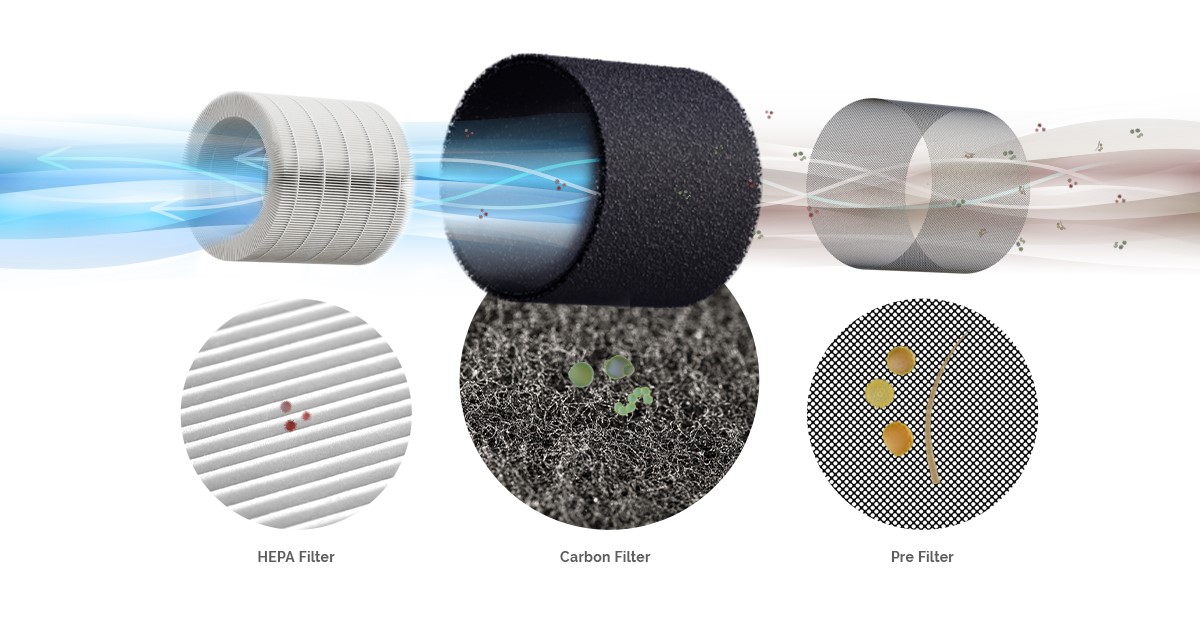
At Fellowes, we believe that creating healthier indoor spaces requires more than just catching dust. That’s why multi-stage filtration with activated carbon is standard in our Array air purification units. Our systems are built to address a broader spectrum of pollutants, offering precision where it matters most.
As awareness grows around the limitations of standard HVAC filters and the risks of chemical pollutants, decision-makers in commercial spaces have an opportunity to rethink how clean their air really is.
Activated carbon filters help turn invisible threats into manageable challenges and make healthy air a shared reality.
Connect with a Fellowes Air Quality expert to discuss what air purification filtration approach is best for your space.


0 Comments