

When we think about air quality, most of us picture outdoor pollution—car exhaust, wildfire smoke, or industrial emissions. But the air inside your building may have just as many, if not more, invisible contributors to poor air quality.
One of the most unexpected? Microplastics. A recent review published by the International Journal of Environmental Research and Public Health found that people may inhale tens of thousands or even millions of microplastic particles each year, with indoor air and bottled water being major sources. Many of the particles can also originate from everyday items like carpets, furniture, and packaging. It’s a startling idea—breathing in plastic—yet it’s happening in offices, classrooms, and shared spaces around the world.
Microplastics aren’t the only synthetic threat in the air. Another emerging concern is per- and polyfluoroalkyl substances, or PFAS, often called forever chemicals due to how long they persist in the environment and the human body. These chemicals are used to make products resistant to stains, water, and grease and can be found in everything from treated upholstery and carpets to cleaning products. A recent study suggest PFAS can become airborne in the form of dust or tiny particles, adding another layer of complexity to indoor exposure.
And microplastics and PFAS are just the beginning. Many indoor pollutants come from routine parts of the workday, things you’d never expect to end up in your breath.
Even in well-maintained commercial spaces, offices, schools, and healthcare buildings, there can be a complex mix of particles and gases circulating throughout the air. And because most of them are invisible, they’re easy to overlook.
Tiny Particles, Big Impact: What Falls Under PM
According to the World Health Organization, exposure to fine particulate matter like PM2.5 is linked to increased risk of respiratory and cardiovascular problems, even at levels below current air quality standards.
Indoor air sensors often measure particulate matter (PM) by size:
PM10 – Larger particles like dust, dirt, or pollen
PM2.5 – Fine particles from sources like smoke
PM1 – Ultrafine particles like viral aerosols – can penetrate deep into the lungs. A 2019 study found that over 75% of PM2.5 in the environments studied (from schools to industrial sites) was made up of PM1 sized particulates. Despite their prevalence, PM1 particles are the hardest to manage and often go undetected without advanced sensors.

Most people associate these with obvious sources: wildfire smoke, outdoor air pollution, or dust. But in everyday spaces, there are plenty of less obvious contributors, often tied to routine activities you wouldn’t expect to impact air quality.
Here are some examples that fall into each PM category:
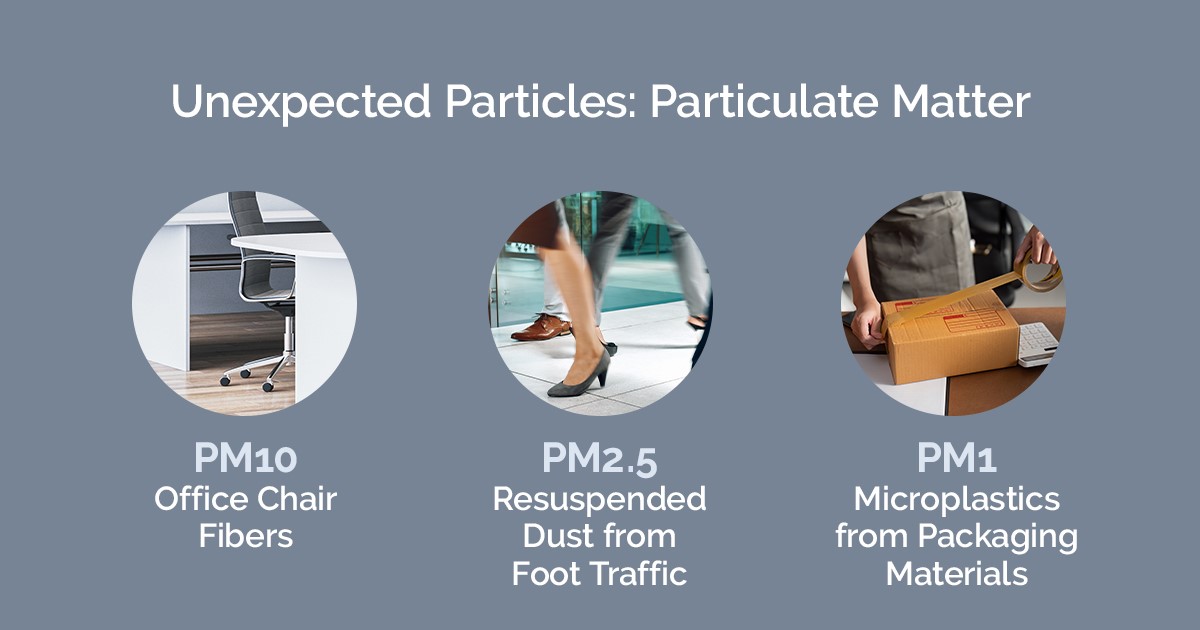
PM10: The Coarse and Common
- Fibers shed from carpets and upholstered chairs
- Particles stirred up during vacuuming or floor cleaning
PM2.5: The Fine and Frequently Overlooked
- Resuspended dust – Fine particles kicked up by foot traffic or moving furniture
- Cooking and reheating food – Microwaves and toaster ovens in breakrooms can release fine combustion particles and oils
- Particles released during minor maintenance involving sanding, hammering or screwing materials together
PM1: The Ultrafine and Unexpected
- Toner dust from laser printers and copiers
- Combustion byproducts from appliances or building systems
- Microscopic debris from building materials or insulation
- Ultrafine fibers from aging furnishings or synthetic textiles
- Airborne microplastics and nanoplastics released from synthetic carpets, upholstery, or packaging materials
- PFAS-laden dust particles originating from treated surfaces or consumer products
These particles can linger in the air long after the source is gone, especially in spaces with limited ventilation or without localized air cleaning.
Invisible Gases: The Overlooked Side of Air Quality
TVOCs (Total Volatile Organic Compounds) are gases that come from everyday products and activities. You can’t see them, and you might not always smell them, but they’re in the air, and they add up. Elevated VOC levels can lead to reduced cognitive performance including focus, memory, and decision-making.
Common sources in commercial spaces include:
- Cleaning products used during or after hours
- Dry erase markers and adhesives in office or classroom supplies
- New furniture, carpet, or building materials slowly off-gassing over time
- Scented items like air fresheners, diffusers, and even personal fragrances
- Reheated meals or coffee brewing in kitchens or breakrooms
- Paint touch-ups, sealants, or maintenance work
Even individually, these aren’t unusual—but together, they can contribute to discomfort, headaches, or even reduced concentration. And since many VOCs interact with each other (or with ozone) to create new byproducts, the picture gets even more complicated.

So… What Can You Do?
The goal here isn’t to raise alarm, it’s to raise awareness. A lot of these sources are simply part of how spaces are used and maintained. The challenge is that you often can’t tell there’s an air quality issue until people start feeling the effects.
That’s where monitoring comes in. Having a clear view of what’s in the air, both particles and gases, can help identify patterns, track down sources, and guide smart mitigation steps. From there, solutions might be as simple as adjusting cleaning schedules, improving ventilation in certain areas, or adding localized filtration in high-traffic zones. A Harvard study on healthy buildings found that improved ventilation and air quality management were directly linked to higher employee productivity and reduced absenteeism.
The good news: these issues are manageable once you know what you’re dealing with.
Indoor Air is Part of the Bigger Picture
Clean surfaces and comfortable temperatures matter, but indoor air quality plays just as important a role in how people feel, focus, and perform. Sometimes, the things affecting it are easy to overlook, especially when they’re invisible.
Whether you’re managing an office, a classroom, or a clinic, taking the time to understand what’s really in your air can make a difference.
If you’re not sure what’s circulating in your space, a great way to get started is to install an IAQ monitor to assess contaminants, like the Fellowes Signal. Another great starting point is a professional air quality assessment, it’s a simple way to get clarity and build a foundation for informed decisions.
Because when it comes to air quality, you can’t manage what you don’t measure. And what you don’t see can still have an impact.


0 Comments