

Southern California’s wildfires are a stark reminder of how quickly air quality can deteriorate. Fires like the Palisades Fire and Eaton Fire have sent smoke traveling hundreds of miles, impacting air quality as far as Nevada and Arizona. Wildfire smoke isn’t just a local issue—it’s a widespread health challenge.
Researchers studying health outcomes in southern California concluded that exposure to particular matter smaller than 2.5 microns, called PM2.5, from wildfires was up to 10 times more harmful to human health compared with exposure to PM2.5 from other sources. The researchers estimated that wildfire-generated particulate matter was three to four times more toxic. Wildfire smoke contains toxic chemicals, metals, plastics, and synthetic materials that can travel hundreds of miles and linger for weeks, posing serious health risks. These pollutants are reversing decades of progress in air quality improvements across the U.S., with the potential to increase related mortality by 50%* if trends continue.
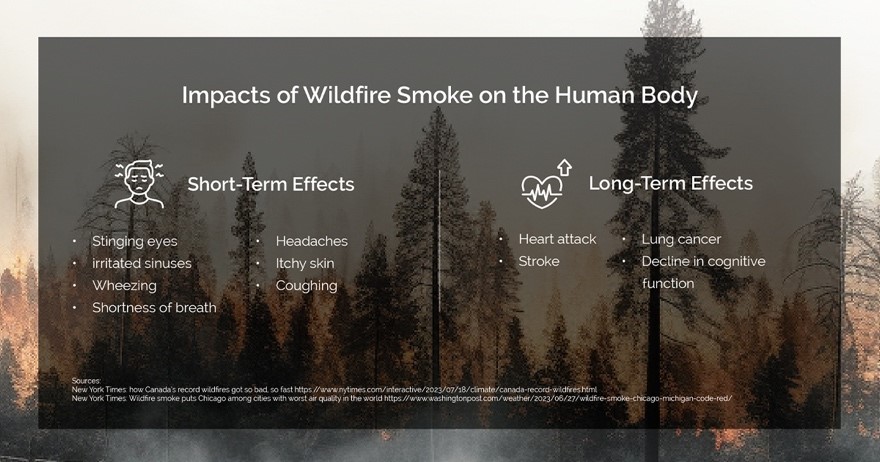
For those managing indoor spaces during wildfire season, proactive air quality strategies are essential to safeguarding health:
- Use Purifiers with High-Efficiency Filters: Utilize portable air purifiers equipped with H13 True HEPA filters to capture ultra-fine smoke particles and enhance indoor air quality.
- Optimize HVAC Systems: Adjust settings to recirculate indoor air and close outdoor air intakes during heavy smoke days.
- Seal Indoor Spaces: Prevent smoke from entering by sealing gaps around doors, windows, and vents.
- Monitor Air Quality: Use air quality monitors to detect pollutants and adjust ventilation as well as air purification systems as needed.
When wildfire smoke becomes unavoidable, these steps can help mitigate health risks, ensuring safer and healthier indoor environments for everyone.
* The New York Times, Far From the Fires, the Deadly Risks of Smoke Are Intensifying, Published Jan. 11, 2025


0 Comments