

Sustainable Solutions Through Zoned Localized Air Purification: Enhancing HVAC’s Green Efforts
Sustainability has become a major focus in virtually every industry and the HVAC industry is no exception. As concerns about climate change and resource consumption grow, both building owners and managers are increasingly looking for ways to incorporate sustainable practices into their operations. HVAC systems, which are significant consumers of energy, represent a key area where sustainability measures can lead to meaningful environmental and economic benefits.
Explore the importance of sustainability in HVAC and Indoor Air Quality’s connection to that focus, current energy conservation trends, and how innovative technologies like Fellowes’ Array system promote a healthier, more sustainable environment. We’ll also highlight how zoned air purification and air quality management support sustainability goals in commercial spaces.
Why Sustainability in HVAC Matters
According to the U.S. Office of Energy Efficiency & Renewable Energy, U.S. buildings account for 35% of the U.S. carbon dioxide emissions that drive the climate crisis. HVAC systems are responsible for a large portion of the energy consumed in commercial and residential buildings. According to the U.S. Department of Energy, HVAC systems account for roughly 46% of total energy use in a building. The implications of this are clear: improvements in the efficiency of HVAC systems can have a massive impact on reducing both energy consumption and carbon emissions.

A 2022 study published in the International Journal of Environmental Research and Public Health highlights that some of the greatest opportunities for improving the sustainability of HVAC systems occur at the design stage of new facilities or through retrofitting existing equipment.1 Retrofitting older systems with energy-efficient technologies can also make a significant difference without requiring a complete overhaul, which is both costly and wasteful.
Beyond reducing energy usage, sustainability in HVAC and IAQ systems also offers other benefits such as improving indoor air quality, lowering operating costs, and contributing to healthier, more productive indoor environments.
Trends in Building Energy Conservation
The push for sustainability in HVAC systems is part of a broader trend towards energy conservation in buildings. Many modern buildings are designed to achieve certifications that reflect their environmental performance, such as LEED, WELL, and Fitwel. These certifications emphasize a holistic approach to sustainability, covering everything from energy use to the quality of indoor air.
Advanced IAQ systems are designed not only to monitor air quality but also to adjust energy consumption based on real-time conditions. For example, smart technologies that integrate sensors, and sense and react technology can adapt air purification systems to varying environmental factors like occupancy and pollutant levels. These adaptive technologies have been found to significantly reduce energy consumption by increasing fan speeds only when needed and ultimately reducing operating costs.
Practical Elements in Creating Sustainability for Commercial Spaces by Leveraging Zoned Localized Air Purification
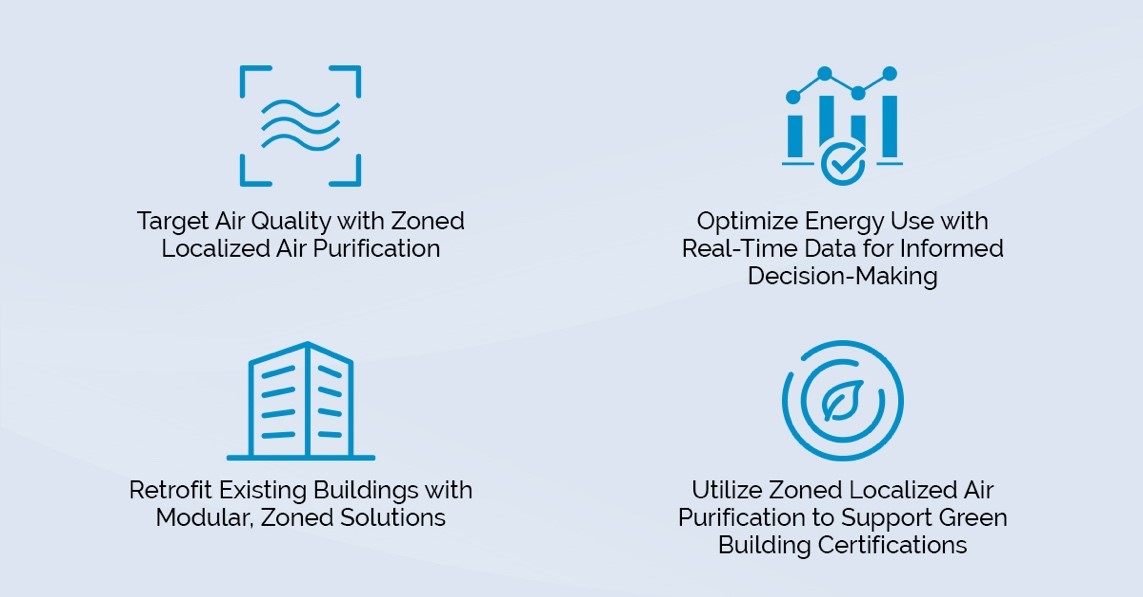
- Target Air Quality with Zoned Localized Air Purification
Zoned localized air purification, such as Fellowes’ Array, allows for precise air quality management by focusing on specific areas within a building. It delivers air purification exactly where and when it’s needed, such as high-occupancy zones or areas with elevated contaminant levels, thereby minimizing energy use in spaces that don’t require the same level of treatment. This targeted approach helps reduce overall energy consumption while maintaining optimal air quality throughout the building.
- Optimize Energy Use with Real-Time Data for Informed Decision-Making
Integrating real-time monitoring with localized air purification systems allows facility managers to make informed decisions based on current occupancy, air quality levels, and other environmental factors, rather than relying solely on temperature-based HVAC controls. By leveraging data on shifting pollutant levels, occupancy trends, and ventilation effectiveness, air purification can be dynamically adjusted to address specific needs. Fellowes’ Array air purification system offers the ability to schedule timers and quiet mode proactively, based on IAQ patterns for your environment. This proactive approach allows for targeted interventions, avoiding unnecessary energy consumption and promoting a healthier, more sustainable indoor environment.
- Retrofit Existing Buildings with Modular, Zoned Solutions
Upgrading HVAC systems with modular, zoned air purification units like the Array system allows buildings to enhance air quality without the need for a complete system overhaul. These modular solutions can be added in stages, adapting to various building layouts or usage changes, and can be easily expanded as necessary. This method reduces material waste and limits the environmental impact associated with full system replacements.
- Utilize Zoned Localized Air Purification to Support Green Building Certifications
By using data from localized air purification and monitoring systems to meet stringent indoor air quality criteria, buildings can achieve certifications such as LEED and WELL. These certifications underscore sustainable practices, boost occupant confidence, and help mitigate risks related to indoor air quality, aligning with sustainability initiatives while enhancing the building’s market appeal.
Enhancing Sustainability with Fellowes’ Array System
Among the various methods for achieving sustainability, Fellowes’ Array system stands out as an advanced solution that embodies these principles through its sense-and-react technology. Fellowes has positioned itself at the forefront of sustainability and indoor air quality with the innovative Array system with its proprietary EnviroSmart+™ sense-and-react technology. This advanced system offers all the features needed to promote sustainability while maintaining high standards for indoor air quality. By automatically adjusting air purification levels based on occupancy and environmental conditions including increased CO2 and VOC levels, airborne illnesses, and outside pollutants such as wildfire smoke, the Array system reduces energy consumption without compromising air quality. Its ability to work alongside existing HVAC systems also makes it a more sustainable option, eliminating the need for costly overhauls or replacements.
In addition to energy efficiency, the Array system contributes to building certifications, helping owners achieve LEED, WELL, and Fitwel certifications by monitoring air quality in real-time and meeting the strict IAQ thresholds required by these standards.
As the urgency for sustainable practices intensifies, localized air purification presents a powerful solution for supplementing HVAC systems. By targeting air quality management to where it’s needed most, leveraging real-time data, and integrating modular systems, we can significantly reduce energy consumption and environmental impact. With the unique ability to network units into zones, enabling a coordinated and proactive response among the units. This zoned approach allows the system to intelligently adapt purification levels across the network, optimizing air quality in specific areas based on real-time needs.
Fellowes’ Array system exemplifies this approach, offering advanced technology that not only supports compliance with green building standards like LEED, WELL, and Fitwel but also enhances occupant health and well-being. Further emphasizing sustainability, Fellowes is committed to extending product life and reducing landfill waste. The Array system features a 1-year filter life to minimize waste, Array product packaging is 99% recyclable, a 3-year warranty on sensors and display, and a 5-year warranty on other components, ensuring long-term durability. Fellowes also provides in- and out-of-warranty service at customer locations and offers refurbished units to further reduce waste. Through these efforts, Fellowes aligns with its broader mission to protect the planet by using recyclable materials, maintaining zero-waste-to-landfill operations in its U.S. manufacturing facilities, and continually innovating to reduce environmental impact.

The path to sustainability isn’t just about reducing energy costs; it’s also about creating spaces that are healthier, more efficient, and adaptable to future needs. With localized air purification, building owners and managers can take proactive steps to achieve sustainability goals, foster occupant confidence, and contribute to a greener, more resilient future. Embracing this forward-thinking approach positions organizations at the forefront of sustainable innovation, paving the way for healthier indoor environments and a more sustainable world.
Learn more about Sustainability at Fellowes here.


0 Comments